 Prompt
Travel Photo Prompts: You Anywhere in the World

The trip is not happening this year. The budget does not add up, the time off does not line up, and the list of places you want to see has been sitting in your notes app since 2019.
In the meantime, you can see yourself there. One good photo and a prompt put you in front of the Eiffel Tower in seconds, with the right light and the right clothes. The next 8 minutes cover which photo to upload, the twelve destinations already written, and the one rule that actually matters: how to use this without becoming the person who fakes trips they never took.
The golden rule: the light of the place has to hit your face
Keep this sentence, because it is the difference between a travel photo and a crude cut-out: what gives a composite away is not the scenery, it is the light. You photographed at night, indoors, pasted into a midday desert, looks wrong even with a perfect background. Your skin has to receive the light that place has at that hour.
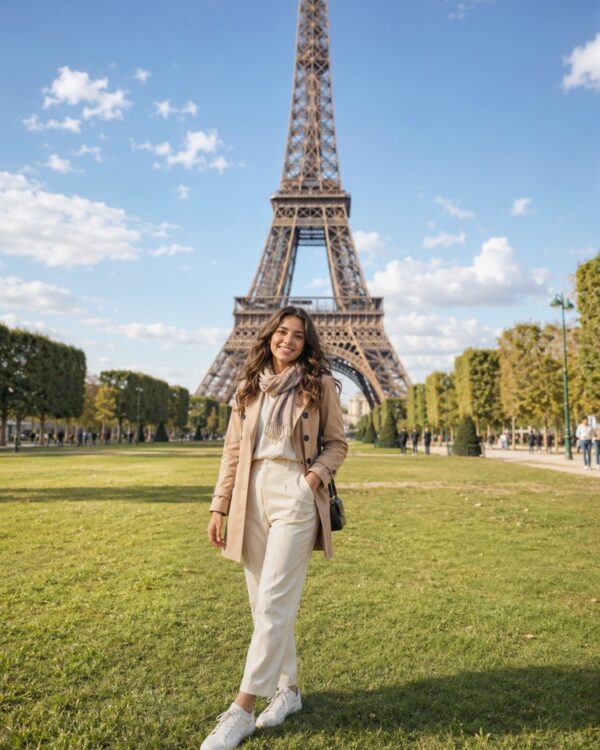
That is why the recipes on the site describe the time of day and the direction of the light alongside the scene. Your Photo at the Eiffel Tower in Paris With AI is the most direct example: it does not just ask for the tower, it asks for late afternoon light from the side, which is what makes a face belong to that place.
The photo you upload decides half the result
A travel photo has one requirement beyond an ordinary portrait: the body has to be coherent with the scene. What counts:
- Full body or half body, not just the face. A big landscape with a floating head is mistake number one.
- Outdoor light, ideally from the side. A photo taken under a yellow bulb fights any sunlit destination.
- Neutral clothes that match the climate. A winter coat in the Maldives gives the composite away before the scenery does.
- No cluttered background. A kitchen or a wardrobe behind you turns into strange objects in the new scene.
- Standing or walking, facing forward. An arm’s-length selfie distorts the face and does not sit well in a wide shot.
If you have a full-body photo taken by somebody else, use that one. It is the material that lifts the result the most, and almost everyone has one forgotten in their camera roll.
The European classics
These are the most requested destinations, and also the most photographed places in the world, which helps: the AI knows them in detail.
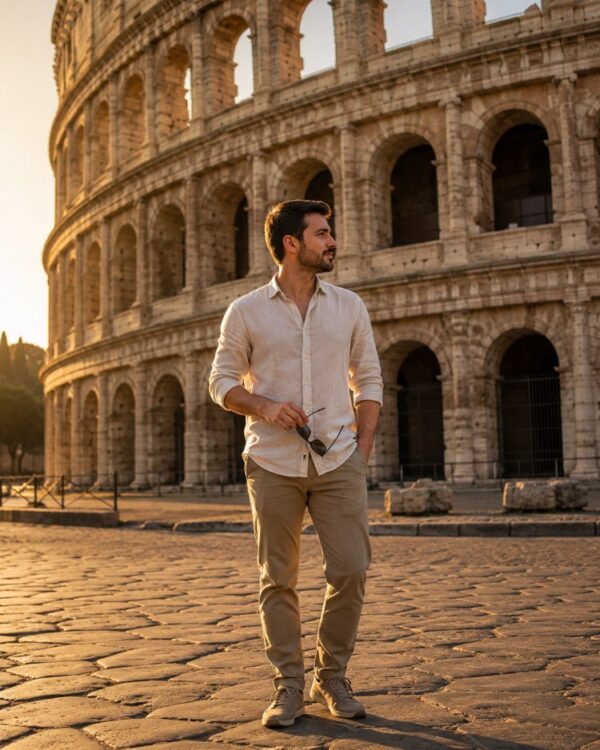
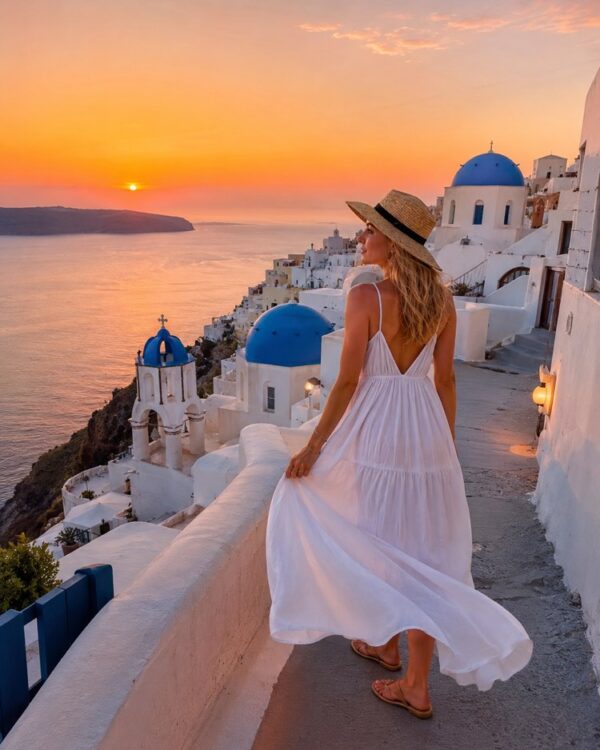
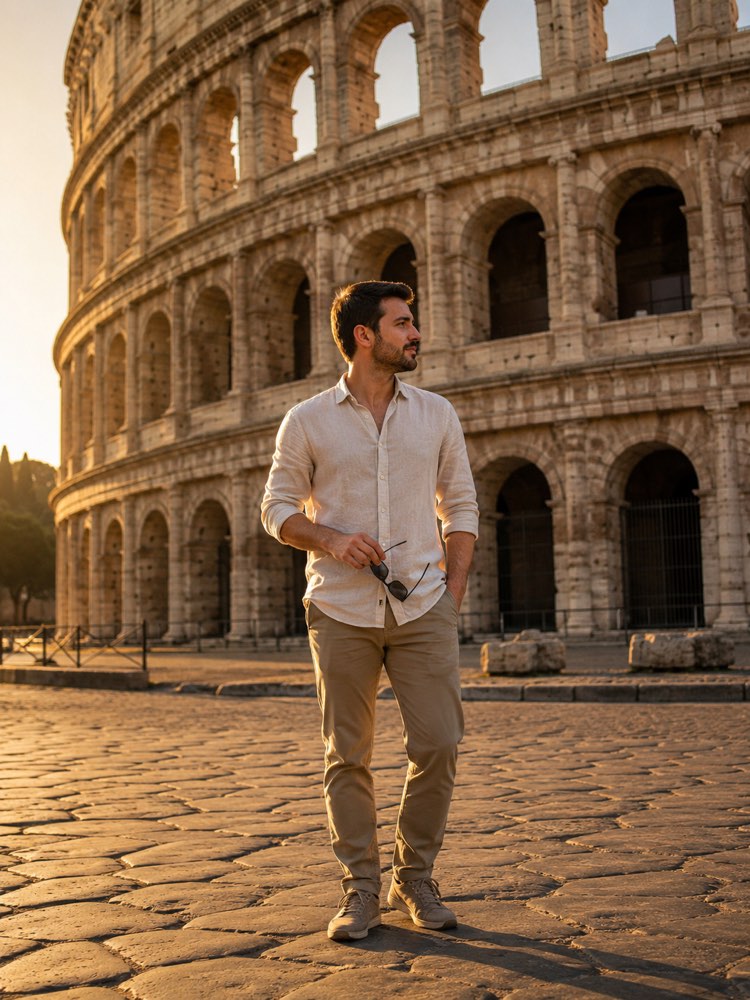
After the Eiffel Tower, Photo at the Colosseum in Rome: You in Italy covers the second most requested, and You in Santorini, Greece: the Photo of Your Dreams is the one that travels furthest on social media, thanks to the white against the blue.
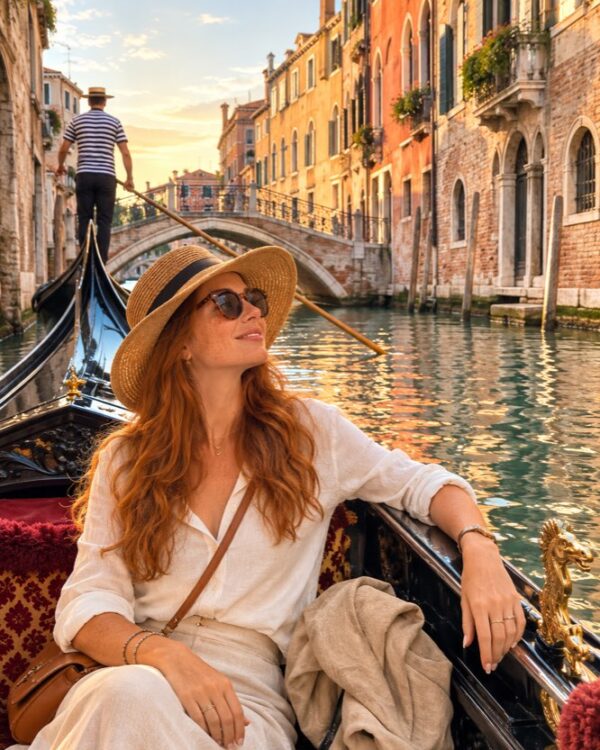
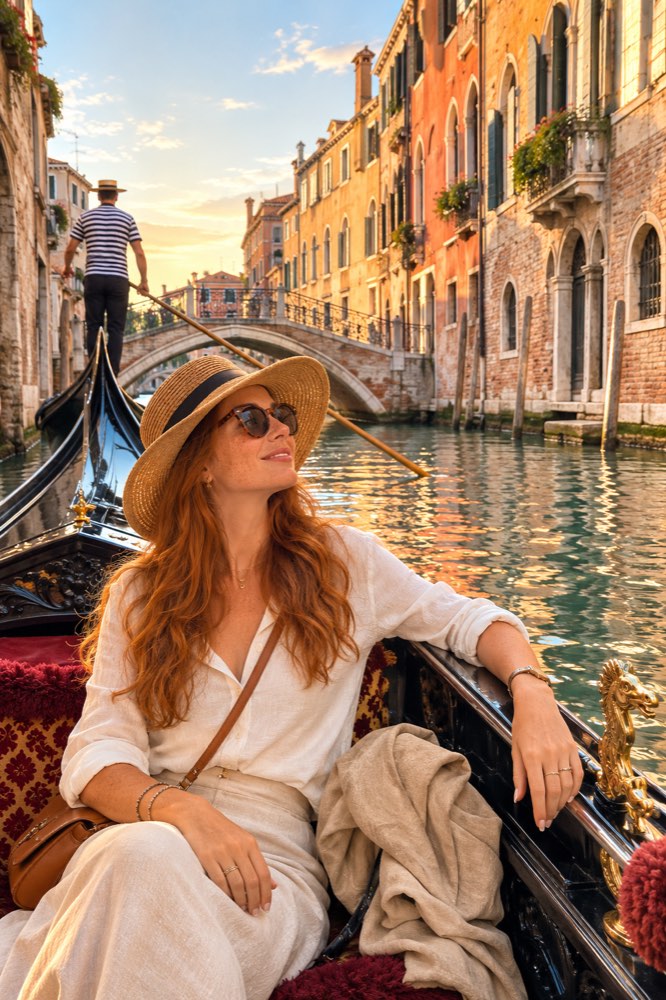
For a photo that does not look like everybody else’s, You on a Gondola in Venice: a Romantic Photo changes the framing entirely: you appear seated, inside the scene, rather than standing in front of a postcard.
The scenes that impress most
Some places make a better image precisely because they are hard to photograph in real life, whether by distance, weather or timing.
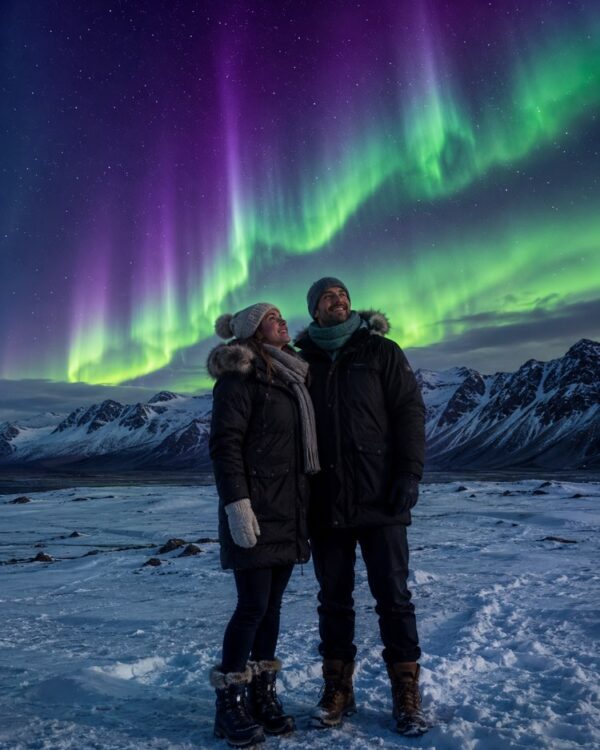
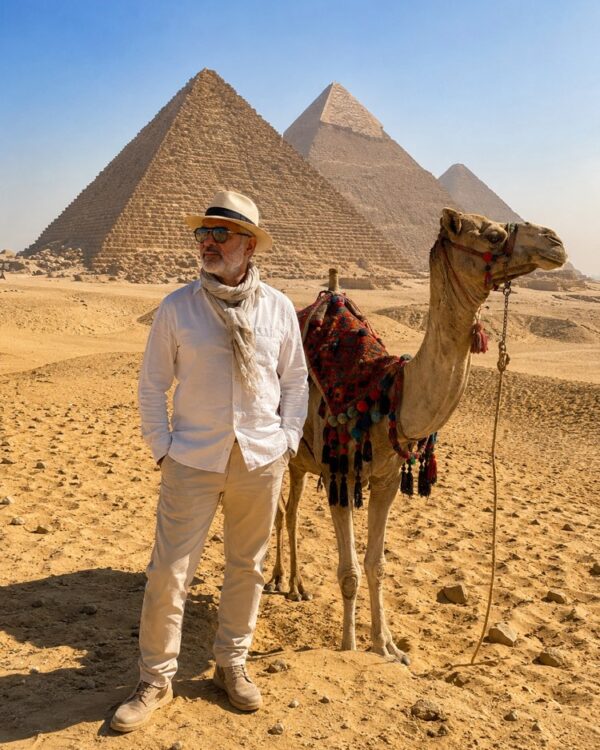
You Under the Northern Lights in Iceland with AI is the extreme case: people who travel to see the aurora usually come home without a good photo, because it needs a tripod and a clear night. In the same vein, Photo at the Pyramids of Egypt: You in Giza delivers the wide framing almost nobody manages with the crowds there.
Natural scenery has its own rule: the bigger the landscape, the more the scale of the body matters. You in Machu Picchu, Peru: a Realistic Photo and Photo on the Great Wall of China Step by Step only work when you appear small enough for the place to look big.
Which destination for which photo
Choosing by favourite place usually returns less than choosing by the kind of image you want:
| You want | Go with | What usually goes wrong |
|---|---|---|
| A photo everyone recognises | Eiffel Tower, Colosseum, Times Square | the same framing as millions of photos |
| Rest and luxury | Maldives, Santorini | winter clothes in the source photo |
| An adventure scene | Machu Picchu, desert, Great Wall | a body too large, which kills the scale |
| A night, urban mood | Shibuya, Times Square | a daytime selfie pasted into a night scene |
| A rare photo, hard in real life | northern lights, pyramids | expecting total realism in an aurora sky |
The honesty rule, which is the only one that matters
This is the section that decides whether this is good fun or a problem, and it is short.
Posting an AI image as a real trip is a lie, and a cheap one to catch: people ask where you ate, how much the hotel cost, whether the queue was long. The conversation takes the photo apart in three messages. It is not worth the saving, and the social cost is larger than the likes.
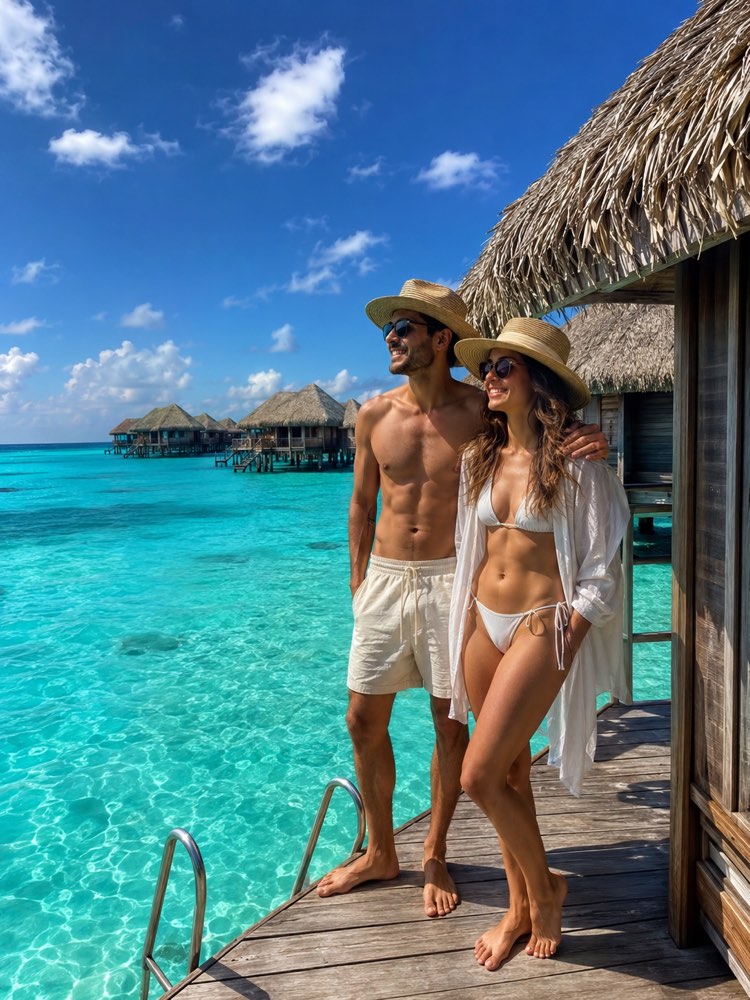
The use that pays off, and the one most people go for, is the declared one: a themed profile picture, a birthday card, a joke in the group chat, a print on the wall, or a vision board of the place you are going. You in the Maldives in an Overwater Bungalow is the image most used as a motivation wallpaper, and nobody needs to pretend they were there.
There is also a legal line, and it is simple: do not use these images to sell a package, illustrate a travel agency ad or prove an experience you did not have. Illustrating a dream is one thing, certifying a service is another, and the second is deceptive advertising.
From the dream to a real itinerary
The best use of these photos is the most obvious and the least discussed: they help you decide where to go.
Seeing yourself in three destinations changes the conversation at home: Photo in Tokyo: You in Shibuya at Night, Your Photo in Times Square in New York and You in the Dubai Desert are three completely different moods, and seeing all three side by side usually settles the argument faster than a spreadsheet.
Once the destination is chosen, the part that actually saves money is written: the Personalized Travel Itinerary builds the days with realistic travel time, which is where a first trip usually falls apart.
And when you get back, A Travel Journal Without the Effort turns loose notes and phone photos into something you will reread in ten years, which is more than most trips leave behind.
The order that works
Put it together in one fifteen minute sitting:
- Pick a full-body photo taken by somebody else, in outdoor light. That single choice changes the result most.
- Pick the destination by the MOOD of your photo, not by the wish list. Your clothes and light have to fit the place.
- Paste the whole prompt and the photo in the same message. Splitting them delivers a generic person in the right scene.
- Check the light and the scale before you fall in love with it. Shadow on the wrong side and an oversized body are the two most common faults.
- Say it is AI when you post it. One sentence does it, and it turns the photo from suspicious into good fun.
Quick questions
Can I make AI travel photos for free?
You can. The free tiers of assistants that accept images usually allow a handful of generations a day, which is enough for two or three destinations. The ceiling shows up when you want a whole album on the same day.
Can people tell the photo is generated?
They can when the light does not match, when the shadow falls on the wrong side or when the body is the wrong size for the scene. Photo at the Colosseum in Rome: You in Italy is a good test of those three, because the architecture gives a scale reference. An image with all three right goes unnoticed, and that is exactly why saying it is AI matters.
Can I use an AI travel photo on my profile?
You can, and it is the most common use. Context changes everything: as a themed picture or a declared joke, it works. As a record of a trip that never happened, it is an awkward conversation waiting to happen.
Does it work with more than one person?
It does, but the difficulty grows fast. With two people the result is still good; with four, the faces start blending. It is worth generating in pairs and combining afterwards rather than asking for the whole group at once.
Can I use a specific place that is not on the list?
You can, by describing the landmark, the time of day and the type of shot. Heavily photographed places come out better; a specific neighbourhood restaurant is something the AI does not know and will invent.
What if I did go there, but have no good photo?
That is the best case of all, and the most honest one. You were there, the photo came out shaky or with somebody in the way, and the generated image rebuilds what you lived. Just keep the clothes and the season coherent with when you went.
Where to start today
Pick a full-body photo of yourself and generate one destination before closing this page. Start with the place whose climate matches the clothes you are wearing in the photo: it is the fastest test and the most instructive, because it shows in practice why light and clothing matter more than the scenery.
After that, the leisure and travel hub holds the destinations left out, the text prompts hub holds the part about planning the real trip, and the lesson on creating an image from a photo explains the step it all starts with.