 Prompt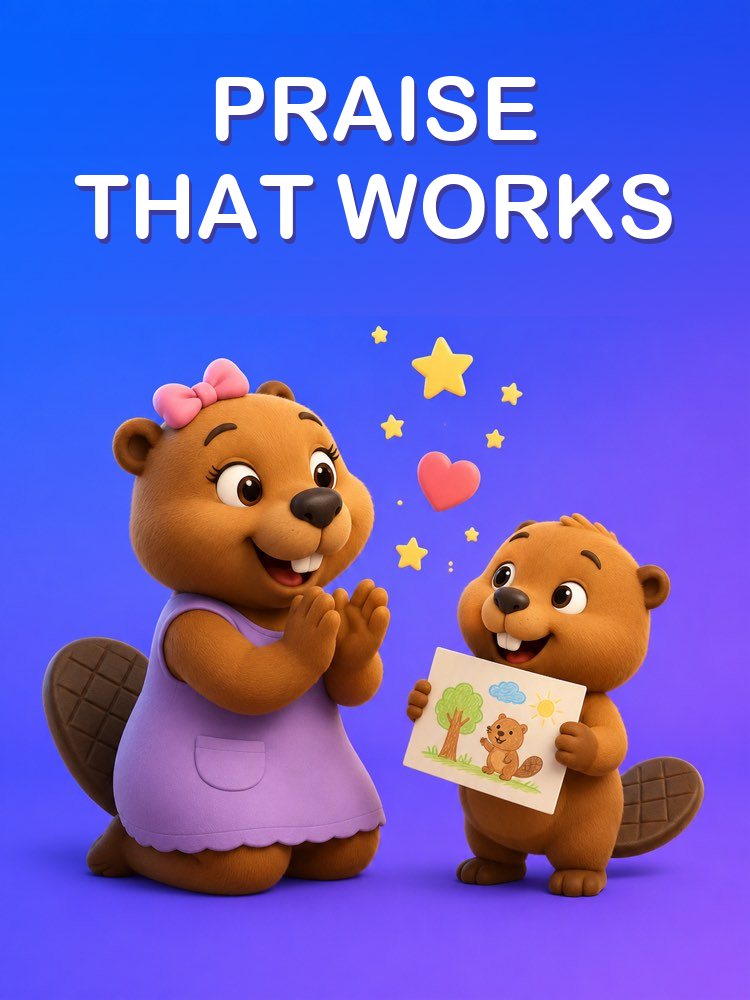
Praise That Builds Confidence
Prompt
Act as a warm developmental psychologist who specialises in positive reinforcement. Teach me to praise and acknowledge my child in a way that builds self-esteem and persistence, valuing the effort and not only the result.
Considering:
- Child's age: [EX: "4 years", "9 years"]
- How I usually praise today: [EX: "'lovely', 'you're the smartest', 'well done'"]
- What I want to strengthen: [EX: "that she doesn't give up easily", "confidence", "trying without fear of getting it wrong"]
- Behaviour that worries me: [EX: "gives up when it's hard", "only does things for a reward", "is afraid of mistakes"]
Rules:
1. Explain the difference between praising the person ("you're clever") and praising the process ("you worked at it, you tried again"), and why the second helps a child persist and stop fearing mistakes.
2. Give me practical phrases of positive reinforcement for different situations (effort, attempts, kindness, independence), always concrete and sincere, and how to acknowledge without it becoming empty flattery.
3. Show what to avoid: over-praising all the time, a material reward for everything, labels ("the clever one", "the messy one") and comparisons with siblings or classmates.
4. Teach me how to give feedback when the child gets it wrong or can't manage, in a way that encourages instead of deflating.
5. Use non-judgemental language, adapt to the age and acknowledge that nobody gets it right every time; the goal is to adjust gradually, not to be a perfect parent.
Ask one question at a time when information is missing. Format: "Praising the person vs the effort", "Phrases that teach", "What to avoid", "When they get it wrong" and "One step to start today".
How to use
Copy the prompt into ChatGPT, Claude or Gemini and fill the [BRACKETS] with your child's age, how you usually praise today and what you want to strengthen in them. The AI explains the difference between praising the person and praising the effort, gives you ready-made phrases of positive reinforcement for all sorts of situations and shows what to avoid, such as a reward for everything and labels — plus how to give feedback when your child gets it wrong. After the first answer, go deeper: ask for "phrases for when he almost gets it and gives up", "how to praise without comparing him to his brother" or "examples for homework time". Remember this is general parenting guidance, a way to adjust gradually, and it does not replace a child psychologist if you have bigger concerns about self-esteem or behaviour.
Works with
ChatGPT
Claude
Gemini
Rate this prompt
📖 From the Prompteiro blog
See all posts →
Job Interview Simulator With AI: How to RehearseText · September 24, 2026

Travel Itineraries With AI: The Guide That WorksText · September 21, 2026

Travel Photo Prompts: You Anywhere in the WorldImages · September 19, 2026

Professional Product Photos With AI: The GuideImages · September 15, 2026

How to Care for Plants With AI: A Black Thumb’s GuideText · September 14, 2026

Decorate Your Home With AI: From Photo to PlanImages · September 11, 2026

Try a Haircut With AI Before You Actually CutImages · September 9, 2026

Colourise Black and White Photos With AI: A GuideImages · September 7, 2026

AI Headshots for LinkedIn: The Complete GuideImages · September 4, 2026