 Prompt
AI for Studying: Exams, Tests and Languages
The scene repeats itself every exam season. Someone opens ChatGPT, types “help me study for the exam” and gets back a beautiful twelve week schedule, with fifty minute blocks and ten minute breaks. They think it looks great, save it to a file and never open it again. Two weeks later they are studying exactly the way they always did, with the same textbook and the same feeling that nothing is going in.
The problem is not the tool and it is not the schedule. It is that “help me study” is a single request, and studying is four different jobs: artificial intelligence is excellent at two of them and gets in the way in the other two. This guide separates the four, says what to ask for in each one and brings ready made prompts for school exams, competitive tests and languages. About 9 minutes of reading, and in the middle there is the part almost nobody writes, which is where studying with AI makes your result worse.
The golden rule: AI organises, you remember
If you keep one sentence from this text, keep this one: let AI do the work of organising and never the work of remembering. Organising is finding what matters inside two hundred pages, putting subjects in an order that makes sense, turning a tangled topic into a map. Remembering is pulling the information out of your own head without looking anywhere. The first part is boring, slow and teaches almost nothing, and that is why it is worth delegating. The second is where learning happens, and outsourcing it is like paying someone to go to the gym for you.
That ruler answers almost every “can I ask AI for this?” on the spot. A summary written by it and read by you: yes. A mind map from it, studied by you: yes. An essay written by it: no, because the essay is exactly the moment of remembering. A question answered by it before you try: no, for the same reason. The Private Tutor for Any Subject can spend a whole afternoon explaining what you did not understand, and that is the best use there is for it. It just cannot become the student.
Studying is four jobs, and AI is not good at all of them
Before any prompt, it is worth separating what you are actually asking for. The table below is the summary of the whole article.
| Stage | What you ask for | Who does the work |
|---|---|---|
| 1. Map | what comes up, what matters and what is just detail | the AI |
| 2. Plan | the order of the subjects and the calendar up to the exam | the AI |
| 3. Train | questions, mock exams, flashcards, conversation in another language | you |
| 4. Correct | where you got it wrong, why, and what to revise because of it | the AI |
Notice how the effort alternates. In stages 1 and 2 you sit down and read what it produced. In stages 3 and 4 it is the opposite: you produce and it assesses. Whoever spends the whole study period inside stages 1 and 2 ends up with the tidiest shelf on the street and does not pass the exam.
Mapping: what to do with the textbook, the PDF and the slides
Here AI beats you comfortably, and there is no shame in that. Reading a hundred pages to find out which twenty matter takes a whole afternoon. It does that in a minute, and it does it far better when you upload the material instead of describing the topic.
Start with the Exam Summary, which is the most direct request there is: material in, what comes up out. Then run the same content through the Mind Map of Any Subject, because a summary and a map are not the same thing. The summary says what is important; the map shows how the parts connect, and the connection is what you manage to pull up during the exam. For books and long articles, Active Reading and Reading Notes solves that classic problem of finishing a chapter and not being able to say what you read.
One thing changes the result of this stage a lot: upload the file. “Explain this piece of legislation to me” gives back what the AI thinks it knows, with a real risk of being out of date. “Here is the PDF, tell me what comes up between sections 20 and 35” gives back what is in your file. It is the same difference as answering from memory and checking the source, and it holds for textbooks, syllabuses, lecture slides and scanned chapters.
Planning: from “I need to study” to what to do today
A generic plan is not followed because it ignores your week. The plan that works comes from a request carrying three numbers: how many hours a day you have, which days are impossible and when the exam is. Without those three, what comes back is that pretty twelve week schedule nobody opens.
For a school, university or certification exam, the 30-Day Study Plan is enough. For a competitive public exam the syllabus is in charge, and the Study Plan from the Exam Syllabus exists for that: it weights the subjects by how many questions each one is worth, instead of splitting the time into equal parts. Splitting it equally is the mistake that makes people spend four weeks on a subject worth three questions.
When two or three weeks are left, change the plan. Studying new material in the final stretch is what costs the most marks, and the Final Stretch Revision Plan makes the cut that is hard to make on your own, because it means accepting that one topic will be left out.
Training: the part you cannot outsource
This is the most important section of the text and the most skipped of all. Reading a summary is comfortable and gives a strong feeling of progress. Answering a question without looking at the answer is uncomfortable, and it is what sticks. If you have one hour, spend twenty minutes reading and forty answering, never the other way round.
Three tools, in order. The Practice Question Generator turns what you have just read into a question, and it is meant for the same day as the reading. Flashcards with Spaced Repetition take care of what needs to come back later, which is the reason you remember a rule in September and forget it in November. And the Mock Exam with a Commented Answer Key is the closest thing to the real exam, because it has a clock, options that look alike and the comment on the mistake, which is stage 4 happening.
The commented answer key deserves insisting on. Getting it wrong and seeing the right answer teaches little. Getting it wrong and understanding why the option you ticked looked right teaches a lot, because the exam board repeats that same trap all year long.
Essays and written answers: it marks, you write
Here the golden rule is stricter than anywhere else. An essay written by AI is worth nothing: the mark it gets is not yours and the examiner does not mark the text you did not write. An essay marked by AI, on the other hand, is one of the best things that ever turned up for people studying alone, because human marking is expensive, takes days and usually comes back with a number and no explanation.
Write yours in exam conditions, by hand if the exam is by hand. Only then run it through the Exam Essay Marker, which gives a mark per criterion and points out what pulled each one down. Do that once a week and you watch the same criterion climb again and again, which is far more motivating than writing ten essays without knowing which one was better.
And it is worth remembering why you are doing all this: the Graduation Portrait with Cap and Gown prompt is the photo on the other side of this story.
Languages: the one case where AI really does replace someone
In almost everything else AI is a complement. In languages it replaces something concrete, which is the conversation partner. What it solves is the part that was always missing: having somebody to speak to at eleven at night, for free, without being embarrassed about getting it wrong in front of anyone.
Practise Spanish Through Conversation is the starting point. Ask it to stay at your level, to correct at the end and not in the middle of a sentence (if it corrects mid sentence, you stop speaking) and to bring up topics instead of waiting for you. Twenty minutes of that a day change your Spanish more in three months than a year of a vocabulary app, because the only thing that unlocks speaking is speaking.
Where AI gets in the way of studying
Three situations, all easy to recognise once somebody points them out.
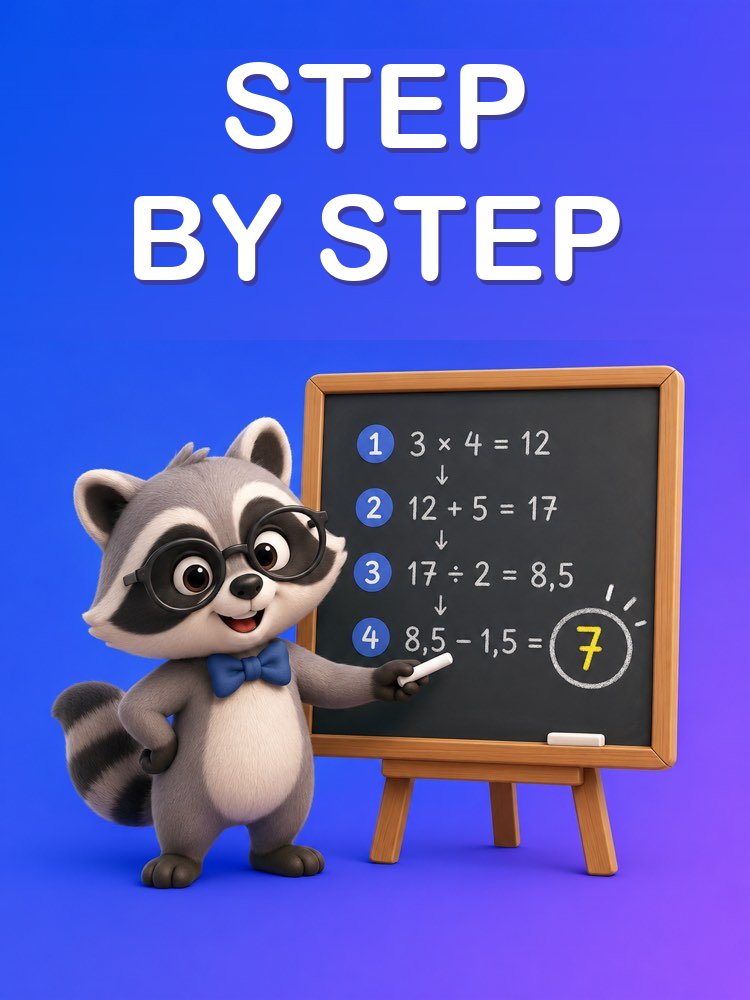
Arithmetic and proofs. AI gets the reasoning right and the arithmetic wrong with a frequency that is genuinely alarming, and it gets it wrong with total confidence. In maths, physics, chemistry and statistics, use Solve an Exam Question Step by Step to understand the path and check the final number on a calculator. The steps are what is worth having; the result is what you audit.
Laws, rules, standards and figures. Asking for the wording of a rule from memory is the most direct invitation to a convincing invention. If it is a law, a syllabus, a table or a date, the content has to come from the file you uploaded or from an answer with a source link. Without one of the two, treat it as a draft.
Comfort. This is the quietest of the three. It is perfectly possible to spend two hours talking to AI about the subject, walk away with the impression of having studied a lot and be unable to answer three questions the next day. If your study session had no moment where you got stuck trying to remember, it was reading, and reading is not studying.
The first week, in order
If you close this page and do only what is here, your month already changes.
- Monday. Upload the syllabus, the textbook or the PDF of the subject and ask for the summary of what comes up. Do not study yet, just read.
- Tuesday. Ask for the schedule with your real numbers: hours a day, impossible days and the date of the exam.
- Wednesday. Study the first topic on the schedule and, on the same day, generate ten questions about it. Answer all of them before looking at the key.
- Thursday. Turn Wednesday’s mistakes into flashcards. Only the mistakes, nothing beyond that.
- Friday. New topic, same ritual: study, generate questions, answer, turn what you got wrong into flashcards.
- Saturday. Mock exam with a commented answer key on what you saw during the week, in exam time and with nothing to consult.
- Sunday. Revise the flashcards and nothing else. Thirty minutes is enough.
Notice that the only day without training is Monday. On the other six AI turns up before or after your effort, never in its place.
Quick questions
Can you study with AI for free?
You can, with room to spare. Summaries, schedules, questions and conversation in another language are short tasks and they fit comfortably into the quota of a free plan. What runs out first is a very large file and burst usage. If you want the full inventory of what free can take, there is a whole article about it.
Does AI for competitive exams actually work?
It works for mapping the syllabus, building the schedule, generating questions and commenting on mistakes. It does not work as a source for laws, rules or percentages, and those have to come from the official file you uploaded. The safe setup is to treat AI as the private tutor and the official source as the book.
How do you use AI to study maths?
Ask for the path, not the answer. Send the question, ask for the step by step solution and check the final result on a calculator, because arithmetic slips are the most common defect in these tools. Then redo the question on your own, on paper, without looking at anything.
Can AI mark my exam essay?
It can, and it is one of the best uses there is for somebody studying alone. It gives a mark per criterion and points out what pulled each one down, as many times as you want. What it cannot do is write the essay, because the mark that counts is the one for the text that came out of you.
Can you learn a language with AI alone?
You can get a long way in conversation, vocabulary and reading. Fine pronunciation, detailed correction and somebody pushing you not to stop are still things a teacher does better. The arrangement that tends to work is one lesson a week and conversation with AI on the other days.
Can AI make things up while I study?
It can, and when it does it sounds absolutely certain. The warning sign is an answer with a number, a date, the name of a rule or a quotation with no source. In those cases, upload the document and ask it to answer from there, or check an official source before memorising anything.
Is studying with AI considered cheating?
Using it to understand, to plan and to train is not. Handing in as your own a piece of work written by it is, and most schools and universities already have their own rule about that. The golden rule works here too: if AI did the effort that was being assessed, it is cheating.
Where to start
Pick a real exam, with a date on it, and do only the first step today: upload the material and ask for the summary of what comes up. The rest of the method only makes sense on top of real content, and almost everybody who gets stuck at this stage gets stuck trying to build the perfect system before studying the first page.
If you want to see what else you can ask for, the text prompts hub has the full collection, and the lesson on how to write a prompt teaches you to adjust any of these to your own case. A well written request saves attempts, and attempts are study time.